One of the easiest ways to refresh a room is with a coat of paint. Deciding to do a new paint job may sound simple until reality hits: choosing the ideal paint color can be overwhelming. With so many shades available, what colors should you choose? What to do if you change your mind once it's already dried? What happens if it doesn’t turn out the way you like it? It can be difficult to know where to begin, especially if you’re renovating room by room or preparing to put your house on the market.
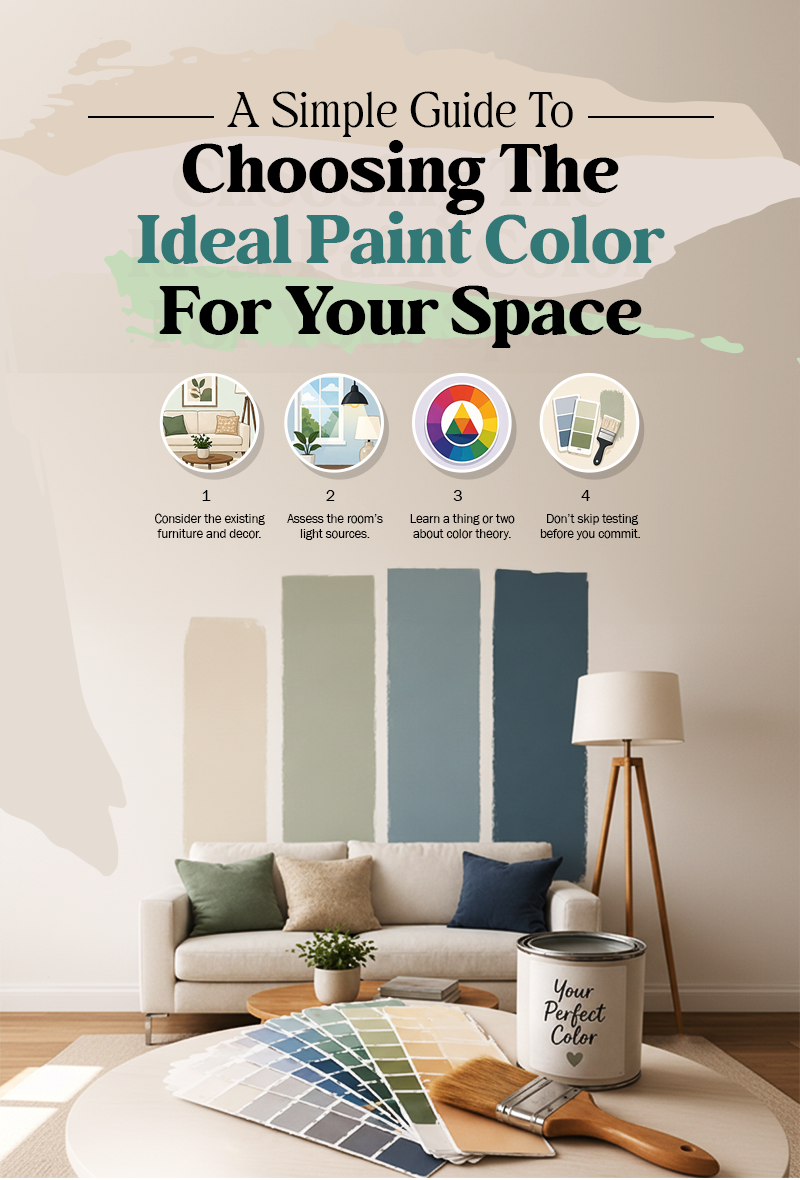
Selecting the ideal paint color can easily transform any space, creating a mood and style that reflects your personality and the room's purpose. Here’s a pretty straightforward guide to choosing the perfect paint colors when updating your space.

When choosing a paint color to give new life to your space, one of the most essential things to consider is the existing elements. Your new shade should complement the current furniture, flooring, fixtures, and even the majority of your accessories. For instance, if the furniture and decor in the room are mostly neutral in color, you may want to experiment with bold, vibrant colors to create a statement.
On the other hand, if your home already has a lot of bold, bright colors, choosing a more neutral hue will balance things out and create a cohesive look. If you have a statement piece of artwork or furnishing in the room, ensure that your selected paint color will enhance or contrast with it without overwhelming the space.
For a complete overhaul of a room, wait until you've finalized most of the furnishings before painting the walls in your desired color. Or, pick neutral colors that are versatile and can easily adapt to different styles and decor updates. Remember that paint is a lot easier to change than purchasing new furniture, so better to wait than regret it later.

It's easy to get fascinated with paint colors when you see them at the store. Unfortunately, that paint color will never look the same when applied to your space or room because of one essential factor: light.
Paint color and light are a complex combination. Your chosen paint color may look different depending on the light that it’s exposed to. Natural light changes throughout the day, while artificial light sources also impact how colors are perceived.
Natural light
The amount of natural light a room receives is an important factor in selecting the perfect shade for your walls. A room or space that receives a lot of sunlight can handle bold, bright paint colors, whereas a room with less natural light may benefit from a lighter, more neutral color.
Check on what direction your room faces, and whether it’s exposed to sunlight from the north, south, east, or west. Consider using Google Earth if you aren’t sure. North-facing rooms tend to be cooler since they receive less direct sunlight throughout the day. Best to compensate by painting the room warmer colors to prevent it from feeling too cold. Conversely, southern-facing rooms get more light throughout the day and are the sunniest place in the home. Choose cooler tones that look vibrant in the bright sunlight but won’t make the room feel too energetic.
Rooms facing the east get the most light in the morning, so better to select a warmer palette to offset the lack of natural light if you’re using it during the evening. On the other hand, west-facing rooms benefit from sunset rays and will have a warm glow in the evening. Allow for cooler paint colors to tone down the light, especially if you’re using it the most around that time.
Artificial light
Similar to natural light, the type of artificial light that you use in your room has an impact on how your colour scheme looks and feels. Fluorescent lights are generally cooler and enhance blues and greens. Incandescents often cast a yellow glow and enhance warm colors such as reds, yellows, and oranges. LED lights are more flexible than other bulb types and look good with most paint colors. On the other hand, halogen lights closely resemble daylight and tend to give the truest color.
When choosing paint colors, turn on various light sources in the room to see how they affect the hues. If you are in the middle of a renovation, it might be better to have the lights installed before you accomplish the painting job.

Knowing the basics of color theory can help you understand the psychological effects of colors, which can be your guide in choosing the perfect paint color for your home. Color theory explores the relationship between colors and the psychological effects of certain color combinations. Familiarizing yourself with the color wheel and concepts like complementary and analogous colors will set a solid foundation for your color selection journey.
For instance, warm colours like reds, oranges, and yellows create a cozy and energetic feel. Blues and greens are known to calm moods. Neutral colors like whites, grays, and beiges provide balance and versatility. By learning a thing or two about color theory, you can appreciate how colors set the mood in a space and be able to create contrasts by using complementary colors.

Since paint colors can look different on different surfaces, lighting conditions, and times of the day, it's a good idea to test the paint color before committing to a full room. Skip the tiny one-inch color swatches from the paint fan deck and go for larger sheets of the paint sample, so the shades are better and help narrow down your color choices. Once you've shortlisted the colors, get small sample jars so that you can paint a large enough section in your space to view in different lighting conditions throughout the day. While this step feels quite tedious, it can help you avoid any surprises and ensure the chosen hue matches your expectations.